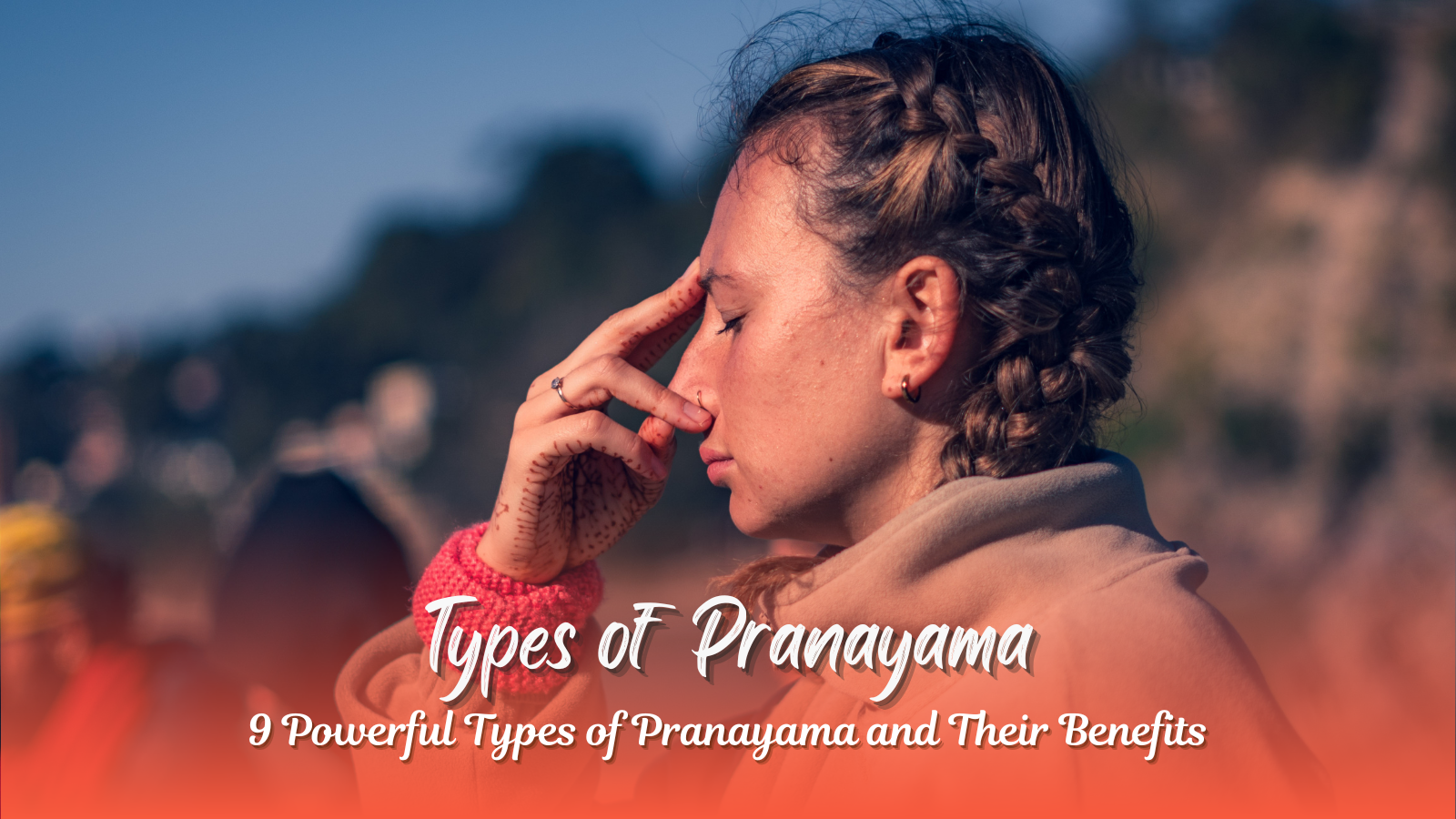
Pranayama, derived from the Sanskrit words “Prana” (life force) and “Ayama” (extension or control), is a yogic breathing practice that enhances physical, mental, and spiritual well-being. It is an essential part of Hatha Yoga and is often practiced to cleanse the body, improve lung capacity, and balance the mind.
There are different types of Pranayama, each offering unique benefits. Whether you are a beginner or an advanced yoga practitioner, understanding the classification of pranayama and practicing it correctly can transform your health.
In this article, we will explore 9 powerful types of pranayama, pranayama benefits and how they can improve your overall well-being.
What is Pranayama? Definition and Importance
Pranayama Definition
Pranayama is the conscious regulation of breath through specific techniques that involve inhalation (Puraka), retention (Kumbhaka), and exhalation (Rechaka). It is an essential practice in yoga, helping to control the flow of prana (vital energy) in the body.
Many yoga practitioners at the Best Yoga School in Rishikesh learn pranayama techniques to enhance their meditation and asana practice.
How Many Types of Pranayama Are There?
The number of types of pranayam varies based on different schools of thought. However, in traditional yoga, there are 9 main types of pranayama, each serving a different purpose.
Many pranayama techniques, such as Bhramari Pranayama and Chandra Bhedana Pranayama, are beneficial for those suffering from hypertension. They help regulate blood pressure, improve circulation, and promote overall well-being.
Practicing these benefits of pranayama yoga types daily can significantly reduce stress and lower high blood pressure naturally.
Who Should Avoid Pranayama?
While pranayama and its types are beneficial, there are certain precautions to consider:
-People with respiratory disorders should consult a yoga expert before practicing intense pranayama like Bhastrika. -Pregnant women should avoid practices that involve breath retention. -Those with severe hypertension should avoid forceful breathing exercises. -People with vertigo or migraines should practice with caution.
To learn more, you can enroll in a 200 Hour Yoga Teacher Training in Rishikesh to understand the correct techniques of pranayama for high blood pressure and other health conditions.
FAQs About Pranayama
1. What Do You Mean by Pranayam?
Pranayama is the practice of controlled breathing to regulate prana (life energy) in the body. It enhances physical, mental, and spiritual well-being.
2. What is the Meaning of Pranayam?
The word “Pranayama” comes from Sanskrit:
Prana = Life force or energy
Ayama = Expansion or control
Thus, pranayama means the expansion and control of breath.
3. Which Pranayam is Good for the Heart?
Anulom Vilom Pranayama
Bhramari Pranayama
Ujjayi Pranayama
These techniques help regulate heart rate and improve cardiovascular health.
4. Can We Do Pranayam During Periods?
Yes, but avoid intense pranayama like Kapalabhati or Bhastrika. Instead, practice Nadi Shodhana and Bhramari Pranayama for relaxation.
Final Thoughts: The Power of Pranayama
The types of pranayama provide numerous health benefits, from improving lung capacity to reducing stress and enhancing heart health. Whether you are a beginner or an experienced practitioner, incorporating pranayama yoga types into your daily routine can transform your physical and mental well-being.
What is Yoga Nidra? Benefits, Steps and How to Practice Effectively
Yoga Nidra, which is literally known as “yogic sleep,” is a progressive approach towards meditation where the practitioner is led into a state of deep sleep with full consciousness. Practiced for centuries in the yogic tradition, Yoga Nidra is gaining immense popularity today, mainly because of its salutary effects upon one’s mental as well as physical health. This article aims to find out what Yoga Nidra is all about, what are its benefits, and how it can reduce stress, anxiety and sleep disorders.
What is Yoga Nidra?
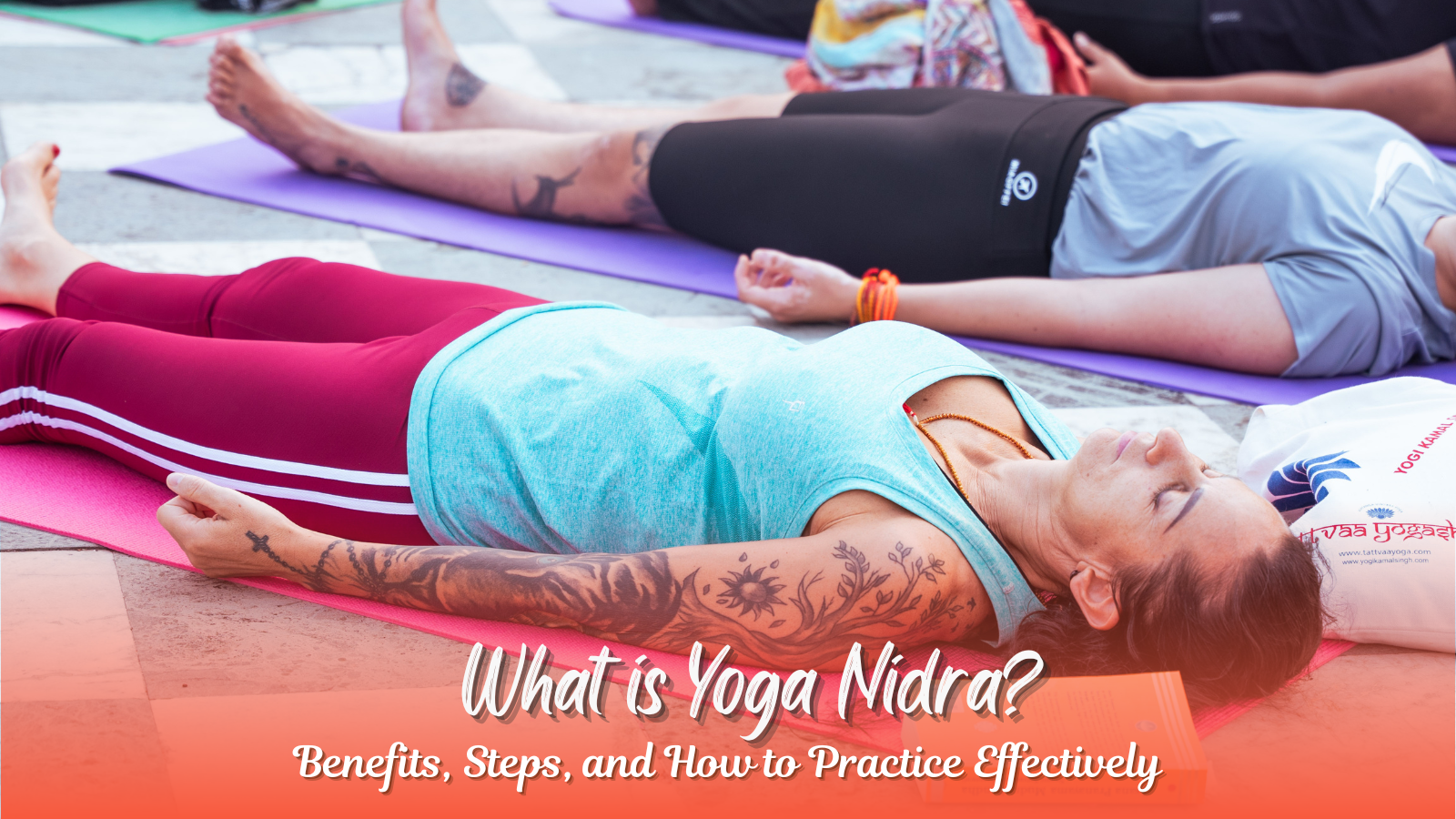
Yoga Nidra is a systematic form of guided meditation that induces a state between wakefulness and sleep. Unlike traditional meditation, which requires intense concentration, Yoga Nidra guides practitioners into deep relaxation effortlessly.
Yoga Nidra is a form of meditation that evokes deep relaxation by taking the practitioner through a body scan, breath awareness, and visualizations while still remaining conscious. It’s a practice wherein the body rests while the mind is awake; thus, there can be a conscious sleep or “yogic sleep.” It is guided meditation that would take you through different stages of relaxation and therefore, let the practitioner feel a heightened awareness and deep release from tension.
The beauty of Yoga Nidra in India lies in its simplicity and accessibility. Unlike other meditation practices, Yoga Nidra can be practiced even by the very old and the very young, with or without any previous experience with yoga or meditation. It is generally done in a lying down position; therefore, the practice is accessible to people who may have mobility issues or possibly have difficulty staying seated for any length of time.
Yoga Nidra Techniques: How to Practice for Deep Relaxation
While the techniques may be different from one tradition or teacher to another, most forms of Yoga Nidra typically entail the following steps:
1. Setting an Intention (Sankalpa): This means that the practitioner sets up a positive intention or affirmation for the practice. This may indeed be a personal goal or maybe even a quality that he or she wants to cultivate. The Sankalpa serves as an anchorage throughout the session.
2. Body scan: He is guided to pay attention to every part of the body from the toes up to the crown of the head. This lets go of the physical tensions and develops a sense of relaxation.
3. Breath Awareness: It generally encompasses awareness about the breath itself, its normal rhythm, or calming the nervous system. Deep conscious breathing in this process helps in further relaxing and grounding of the mind.
4. Sensory Awareness and Visualization: One is guided to visualize images, sounds or sensations that promote peacefulness and serenity. This can include peaceful landscapes or gentle body sensations that bring a sense of relaxation deeper into the body.
5. Relaxation: After the body scan and breath awareness, one enters a deep relaxation state. The practitioner is asked to be relaxed yet alert. This is the magic of Yoga Nidra when the body is fully relaxed, the mind knows.
6. Wake Up: Then it brings the practitioner out of that deep relaxed state, with him slowly being re-awakened into using his senses once again, making the body get back into being aware of all its elements. Yoga Nidra for Sleep
One of the more commonly attributed benefits of Yoga Nidra is to assist with the remedy for sleep improvement. It can activate the parasympathetic nervous system, which controls rest and digest functions. Therefore, it can be a tool that triggers deep rest and sleep. It can be useful for a person who is suffering from problems with sleeping or disturbed sleep pattern.
Unlike the usual meditation that may sometimes require mental discipline and concentration, Yoga Nidra can be used to relax without needing to silence the mind first, making it perfect for people who have been having a hard time quieting their minds at bedtime. One is likely to fall asleep faster, experience deeper sleep and wake up fresher using Yoga Nidra for sleep.
Yoga Nidra Benefits: Why You Should Try It
7 Benefits of Yoga Nidra
Yoga Nidra is extremely beneficial to the body, mind, and spirit. Seven main benefits of practicing Yoga Nidra include the following.
1. Enhances Deep Relaxation & Reduces Stress
This is one method of deep relaxation for both the body and mind. Stress is reduced with such regular practice. Mental clarity increases, which results from having lower levels of the hormone responsible for causing stress-the cortisol.
2. Improves Sleep & Helps with Insomnia
The most requested benefit of the practice of Yoga Nidra is quality sleep. Deep relaxation has the capability to make both the body and mind ease out into a sleeping state. Moreover, it was also used naturally for those experiencing insomnia and not having good sleep quality. Various researches prove that those individuals who practice Yoga Nidra sleep much more quickly and also spend more time in the deeper, restorative phases of sleep.
3. Boosts Mental Clarity & Emotional Balance
Another common practice of Yoga Nidra is through anxiety yoga. The calming impact of Yoga Nidra overcomes the signs of anxiety and brings about emotional serenity. Therefore, with the aid of breath and body awareness as the anchor, anxious thoughts and feelings can be brought to stillness.
4. Supports Spiritual Growth & Self-Awareness
Regular practice of Yoga Nidra has been proven to enhance cognitive functions and mental clarity. It enhances focus and concentration, useful for work, studies and daily activities. In fact, research has suggested that Yoga Nidra can enhance learning and memory retention.
5. Emotional Healing
It produces emotional relaxation due to the ability of Yoga Nidra that enables the participants to enter into a state from where sub-conscious emotions emerge up and consequently, it gives a scope to emotional healing. It allows human beings to transcend through their traumatic past, frights and other negative feelings.
6. Physical Relaxation
Yoga Nidra is an effect that sends one into deep physical relaxation. It helps in body rebalancing and healing. It can really benefit people suffering from chronic pain, tension or fibromyalgia; it can help greatly with back pain.
7. Increased Self-Awareness
Through continuous practice, Yoga Nidra allows individuals to become more aware of themselves. It helps transcend the mind and emotions so that one may find out about his true self, desires and intentions and hence spiritual growth and transformation.
How to Practice Yoga Nidra: Step-by-Step Guide
Yoga Nidra is an easy and highly relaxing practice for anyone, including beginners. Here’s how to practice Yoga Nidra in clear, step-by-step pointers:
1. Prepare Your Space
•Find a quiet, comfortable space free of distractions.
•Lie on your back with your body relaxed. One can use a yoga mat or soft surface but ensure you are well supported by your body.
•Put your arms alongside your body with palms facing upwards. The legs can be a little apart.
2. Set an Intention (Sankalpa)
• Set a positive, affirming intention or goal for your practice (this is referred to as a Sankalpa) prior to starting
• This may be something such as “I am calm and peaceful,” or “I trust my abilities.“
• Repeat the intention silently to yourself, allowing it to vibrate in the mind
3. Body Scan (Rotation of Consciousness)
• Scan the body starting at the toe and moving up through to the head.
•Consciously focus on relaxing the part of your body. Example: “I relax my toes… my feet… my ankles…” and so on.
•Focus on letting go of the tension in all parts of your body. Let the tension go with every breath.
4. Breath Awareness
•Switch to your breath. Notice how your breathing occurs naturally without trying to control your breath.
•Feel your body rise and fall with each breath.
•If your mind wanders, just gently bring your focus back to your breath.
5. Sensory Awareness
•Now, focus your attention on the senses. Take cognizance of the sounds that surround you, the sensations in your skin, the air on your body, and anything else.
•Just be aware of those sensations without judgment; let them deepen your state of relaxation.
6. Visualizations
•You are invited to imagine very peaceful, relaxing imagery. That could be a beach, some beautiful landscape, or something else that makes you feel relaxed.
•Engage all your senses with the imagery-see what you see, hear what you hear, feel what you feel, and smell what you smell in this peaceful setting.
7. Deep Relaxation (Effortless Awareness)
•Let yourself be in a state of deep relaxation, without needing to focus on or control anything.
•Aware of the quiet and serenity around you, let go of any thoughts or distractions. Simply experience the moment.
8. Return to Sankalpa
•At this point, go back to your Sankalpa (intention). Say it again, this time with complete faith and conviction, as if it were already happening.
•Allow this mantra to sink in.
9. Gradual Awakening
•Start slowly bringing your attention back to the present.
•Know your body, the sensations around you and the room.
•Begin by gently wiggling your fingers and toes and stretch your body; when you feel ready, open your eyes slowly.
•Take a few moments to return from this deep relaxation to your waking life.
•Pause for a moment and assess how you feel. You might feel lighter, more centered, or peaceful.
•Be aware of it throughout your day.
Yoga Nidra vs. Meditation: What’s the Difference?
This meditation integrates the physical relaxation of yoga with theclarity of meditation. Through the concentration on each part of the body, breath and visualization techniques, this meditative practice can bring the practitioner into a deeply relaxed yet fully aware state. It is through this meditation aspect that practitioners can then observe their thoughts and emotions in a nonattached manner, enhancing mindfulness and emotional balance.
Yoga Nidra Teacher Training and Certification
If you’re interested in becoming a Yoga Nidra instructor, pursuing Yoga Nidra teacher training or certification is an excellent path. Yoga Nidra teacher training courses are offered worldwide, with many yoga schools offering specialized training in the practice. The training focuses on the principles of Yoga Nidra, its therapeutic benefits and how to guide others into a deep state of relaxation.
Yoga Nidra certification is the formal recognition of your ability to lead people through this practice. A Yoga Nidra teacher who is certified is a person best aware of techniques, benefits and philosophical background that serve well in teaching to students.
Yoga Nidra Books and Resources
For those interested in diving deeper into the practice of Yoga Nidra, there are many books that delve into its techniques and benefits in-depth. Some popular titles include “Yoga Nidra: The Art of Transformational Sleep” by Richard Miller and “The Yoga Nidra Workbook” by Dr. Sonia A. Bera. These resources can offer insights into the theory behind Yoga Nidra and provide practical guidance for your personal practice.
YTT School in Rishikesh
If you want to take a much deeper journey into yoga, then Rishikesh is considered to be the spiritual capital of India and houses many great yoga teacher training schools. It is the perfect destination for a Yoga Nidra teacher training course where the students can learn the ancient practices amidst the peaceful Himalayan foothills.
Choosing the right school of Yoga in Rishikesh for Yoga Nidra training will provide you with a qualified instructor, a rich curriculum, and a genuine yogic experience. Many schools as part of their teacher training courses include Yoga Nidra and allow students to practice teaching it.
FAQs
1. What are the effects of Yoga Nidra?
The more you practice Yoga Nidra, the more your body relaxes into a deep state and your mind remains conscious, and so it allows one to deeply rest and rejuvenate just like a deep sleep without losing consciousness. Some even say that it helps improve mental clarity, reduces stress, and heals the body.
2. Why do I cry in Yoga Nidra?
Crying in Yoga Nidra may serve as an emotional release. Because in deeper relaxation and contact with the subconscious mind, unresolved emotions, memories or traumas begin to surface in the process of healing. It can ultimately lead to higher emotional well-being.
3. Who is the god of Yoga Nidra?
In the yogic tradition, Savitri is often quoted as the goddess of Yoga Nidra, but being a manifestation of divine feminine energy, the practice transcends specific deities and is just a spiritual instrument for deep relaxation and self-realization.
4. Why is Yoga Nidra so powerful?
Yoga Nidra is powerful because it activates both the physical and mental aspects of relaxation. It allows practitioners to reach a deep state of consciousness in which the body heals, the mind rests and emotional balance is restored. The practice also encourages self-awareness and spiritual growth, making it a transformative experience.
Yoga Nidra is a profound practice that offers various benefits for those seeking to ease stress, anxiety and sleep disorders. Whether for relaxation, emotional healing or self-discovery, practicing Yoga Nidra is excellent for overall development. By getting into this discipline, you’re going to end up with real deep relaxation along with mental lucidity and also emotional balance. If you consider teaching others this path to recovery and transformation, you may join a Yoga Nidra teacher training or take certification.
If you really want to dive deeply into the transformative power of yoga, consider attending a200 Hour Yoga Teacher Trainingat an established Yoga Gurukul in Rishikesh. The program will give you the best yoga and meditation training but teaches you to live a more centered, mindful life. You shall discover the depth of your practice in a truthful and nurturing environment, be given the confidence and tools to succeed in all aspects of your life.
12 Surya Mantras: Their Power & How to Use Them in Surya Namaskar
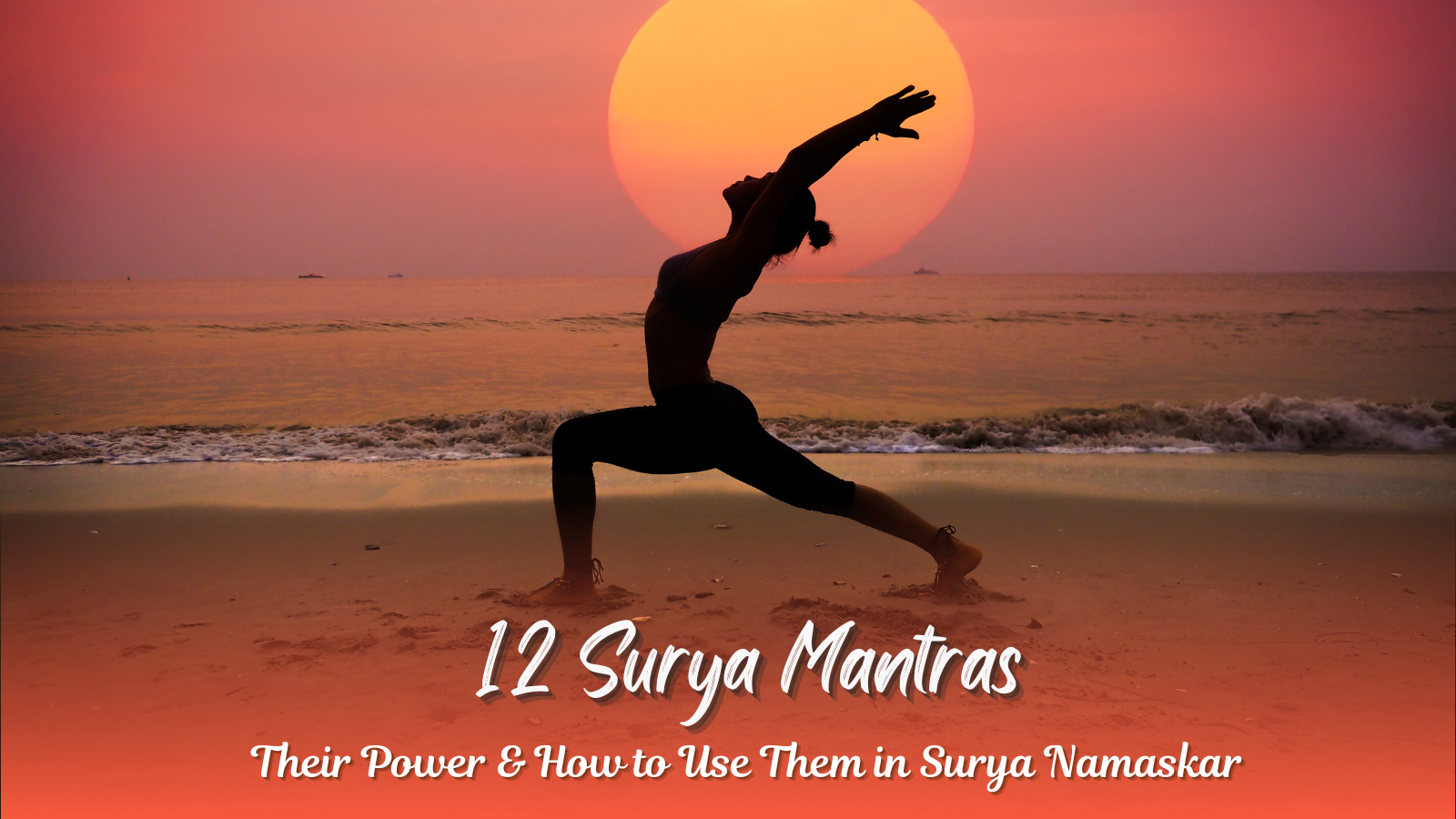
Surya Namaskar, or Sun Salutation, is a powerful yoga sequence that combines 12 asanas of Surya Namaskar with sacred mantras to create a spiritual and physical experience. The 12 Surya Mantras Namaskar are chanted with each movement, enhancing its benefits and deepening the connection with solar energy.
Whether you’re a beginner or an advanced practitioner, learning which 12 Surya mantras to chant while doing Surya Namaskar can elevate your yoga practice. If you’re looking to master Surya Namaskar and other traditional yoga techniques, joining a 200-hour yoga teacher training course in Rishikesh at a yoga teacher training school in Rishikesh can provide deeper insights.
In this article, we go through the meaning of the 12 Surya Mantras, how it makes the practice of Surya Namaskar more special, and ways to incorporate these mantras in your daily life for maximum impact.
What are the 12 Surya Mantras?
These mantras are for the Surya and comprise 12 divine invocations unto the Sun god, of whom each must be done alongside every stance for Surya Namaskar. Every stance here is directly connected to an appropriate Mantra, wherein not only connecting and linking are with the dearness of Suriya the one in power by which solar is worshipped here, but empowering energies associated in strength-healing and that boosts one’s consciousness while getting trained.
The 12 Surya Mantras are as follows:
Each step in Surya Namaskar is associated with a specific Surya Namaskar mantra, which aligns the body, breath, and energy with cosmic vibrations. Here are the 12 Surya mantras Namaskar and their significance:
1. Om Mitraya Namaha
Salutations to the friend of all, the Sun, who enlightens the whole world.
2. Om Ravaye Namaha
Salutations to the Sun, which gives birth to light and heat in everybody.
3. Om Suryaya Namaha
Salutations to the Sun, as he is one form of cosmic power and energies.
4. Om Bhanave Namaha
Salutations to the Sun, through which everybody breathes, live and obtain all forms of nutritions.
5. Om Khagaya Namaha
Aalas to the Sun, who move through the sky with brightness and powers
6. Om Pushne Namaha
Aalas to the Sun, who bestows and sustains life on the Earth.
7. Om Hiranyagarbhaya Namaha
Aalas to the Sun, golden womb of creation and all things.
8. Om Marichaye Namaha
Aalas to the Sun, who grants and nourishes all energies and forces of life with radiant energies.
9. Om Adityaya Namaha
Salutations to the Sun, son of Aditi, the universal mother.
10. Om Savitre Namaha
Salutations to the Sun who gives light on the path of knowledge and wisdom.
11. Om Arkaya Namaha
Salutations to the Sun who is revered and hailed by all creatures.
12. Om Bhaskaray Namaha
Salutations to the Sun who gives light and removes darkness. How do the 12 Surya Mantras Improve Your Surya Namaskar Practice?
When chanting 12 Surya Mantras during Surya Namaskar practice, it creates a deep influence on the body and mind. Here is how they enhance practice:
1. Connecting with Cosmic Energy
The 12 Surya Mantras serve as a link between personal and universal energy. Chanting every single one invokes cosmic power: the healing power of the vitality from the Sun. This cross-linked connection also elevates the importance of the practice, and gives it the impression of the deeply reverential, grateful experience that comes out to appreciate lively sun qualities.
2. Synchronize the Mind with the Body
The rhythmic chanting of mantras helps keep the body movement in rhythm with breathing. So, a mantra is associated with a specific asana, thus reminding you of maintaining the postures that relate to the respective mental focus. The mantra even has a soothing meditative ambience, which makes you all the more vigilant and alert for the practice.
3. Vibrations on the Higher Scale
The mantras, being sacred words that can build up the flow of prana in the body and thus break up the blockages and healings, are known to heighten the vibrational frequency of the practitioner. In the raising of the energy level, it further benefits the complex practices involved in Surya Namaskar, from the flexibility of the body to the condition of emotional balance.
4. Elevation of Spiritual Growth
The 12 Surya Mantras are not physical exercises; they are spiritual practices by themselves. Every mantra connects you to the several dimensions of Sun’s energy and, hence makes your spiritual journey more intense. Surya Namaskar with mantras is an expression of bhakti or devotion and mindfulness, which further develops the bond.
5. Balancing the Mind and Emotions
This Mantra that’s being chanted during Surya Namaskar calms the mind. The more sacred any sound is repeated, it has a better healing effect reducing stress, anxiety, and mental clutter so the results of practice can be achieved easily. There is a bringing within of emotional well-being by especially emotional balance and stability.
6. Raises Energy and Vigor
The Sun is a source of energizing energy, and by reciting those mantras, you are inviting that energizing power within your body. That infusion of energy would gradually create physiological stamina, enhance immunity, and bring your general vitality on high tide. The 12 Surya Mantras will activate the energy centers so you will feel reinvigorated after practicing them.
7. Strengthens Intention Setting
The power of intention, or Sankalpa, gets greatly enhanced with 12 Surya Mantras. Each of the mantras is an affirmation, strengthening the intentions for your practice. The mantras make your desires become manifest in every aspect: body, emotions, and spirit-in the practice-when you start aligning the thoughts, words, and deeds with your purpose.
Surya Namaskar Steps: Step-by-Step Guide
There are 12 Surya mantras refer each mantra, asanas in Surya Namaskar. Each of the asanas has a particular mantra which is recited with it. Each step in Surya Namaskar is synchronized with a specific mantra, making the practice a perfect blend of movement, breath, and devotion. Below is a step-by-step Surya Namaskar breakdown along with its associated mantras: Here are the mantras to be said along with the 12 Surya mantras, asanas of Surya Namaskar:
1. Pranamasana, or Prayer Pose
Mantra: Om Mitraya Namaha
Stand upright, hands together in prayer, accepting the force of the Sun.
2. Hasta Uttanasana, or Raised Arms Pose
Mantra: Om Ravaye Namaha
As you stretch your arms up to the sky, reach out to the Sun and fill yourself with his energy.
3. Padahastasana Standing Forward Bend
Mantra: Om Suryaya Namaha
Bow forward, touch the earth, and pay respect to the sun in all aspects.
4. Ashwa Sanchalanasana Equestrian Pose
Mantra: Om Bhanave Namaha
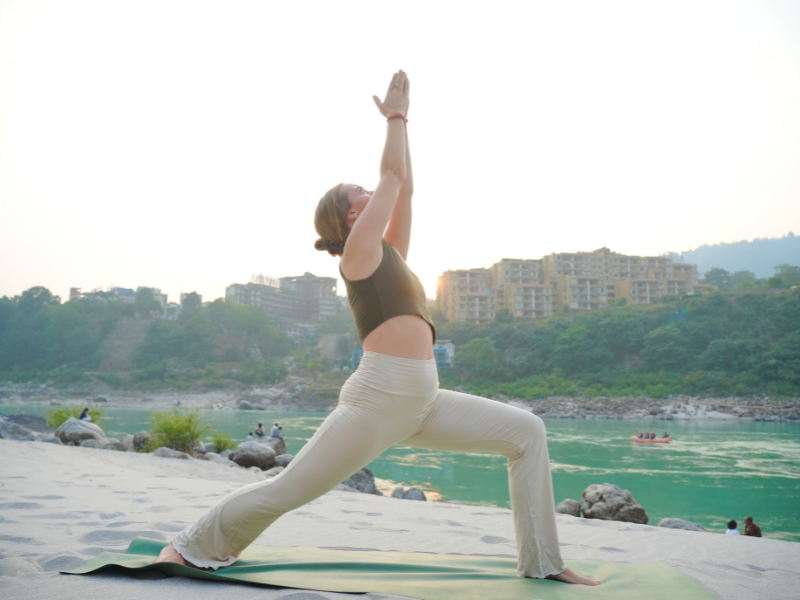
Bring one leg backward and bend the other knee. Bend forward in reverence to the sun’s light.
5. Dandasana Plank Pose
Mantra: Om Khagaya Namaha
In this strong pose, hold your body straight like a plank, channeling the Sun’s steady strength.
6. Ashtanga Namaskara Salute with Eight Parts
Mantra: Om Pushne Namaha
Lower your body down, keeping the eight parts of the body hands, feet, chest, chin, knees on the ground, honoring the Sun.
7. Bhujangasana Cobra Pose
Mantra: Om Hiranyagarbhaya Namaha
Raise your chest off the ground in a gentle backbend, symbolizing the Sun’s life-giving energy.
8. Adho Mukha Svanasana Downward Facing Dog
Mantra: Om Marichaye Namaha
Lift up your hips and form an inverted V shape with your body feeling the energy flowing through.
9. Ashwa Sanchalanasana Equestrian Pose
Mantra: Om Adityaya Namaha
Take one leg forward, bend the knee and extend the other leg backward and press it on the ground.
10. Padahastasana Standing Forward Bend
Mantra: Om Savitre Namaha
Fold forward again keeping the stretch and letting go of all tension.
11. Hasta Uttanasana Raised Arms Pose
Mantra: Om Arkhaya Namaha
Take a deep breath and extend forward once again, bringing your body into line with the power of the Sun.
12. Pranamasana Prayer Pose
Om Bhaskaray Namaha
Finalize the sequence by returning to the prayer pose and closing the circle of energy and appreciation.
By chanting the Surya Namaskar 12 Surya mantras with each pose, practitioners align their energy with the cosmic forces, enhancing both physical and mental well-being.
Benefits of Surya Namaskar with Mantras
Practicing Surya Namaskar regularly provides multiple benefits for the body, mind and soul. Some of the key benefits of Surya Namaskar include:
• The chanting of mantras in Surya Namaskar brings clarity and focus.
For those looking to deepen their practice, joining the best yoga school in Rishikeshoffers a structured way to learn traditional techniques under expert guidance.
Yoga Teacher Training and Surya Namaskar
If you want to intensify practice or teach Surya Namaskar with 12 Surya mantras, then coming to Rishikesh is the best 200-hour Yoga Teacher Training programme. Rishikesh comes to be widely known as “Yoga Capital of the world.” There can be a plenty of yoga teaching programs that engage traditional practices involving Surya Namaskar with mantras. Understanding what are the 12 Surya mantras Namaskar helps to elevate the experience.
If you want to master 12 Surya mantras with Surya Namaskar steps and its deeper spiritual significance, consider joining a yoga teacher training school in Rishikesh. The greatest yoga teacher training in Rishikesh is one that combines the physical and spiritual realms of yoga with a focus on teaching classes and creating transformations. The greatest schools will lead you through the most accurate ways of teaching Surya Namaskar, meditation, pranayama, and chanting mantras so that you can authentically feel confident in your teachings. At a top yoga school in Rishikesh, experienced teachers guide students through step-by-step Surya Namaskar, ensuring alignment, breath coordination and spiritual depth.
Frequently Asked Questions FAQs
1. What is the strong Surya mantra?
• Most powerful Surya mantra is said to be “Om Adityaya Namaha.”
O This mantra directly addresses the Sun energy and acknowledges him as the creator and sustainer of all beings. Covers 12 poses of Surya Namaskar with 12 Surya mantras, alignment, breathing techniques, and philosophy.
o Symbolic meaning: The word “Aditya” is synonymous with the Sun, and the word “Namaha” is synonymous with bow or offering reverence. By reciting this mantra, one becomes in harmony with the cosmic power of the Sun, which would cleanse and rejuvenate the body, mind, and soul.
O Benefits: By reciting this mantra, the user will reportedly be imbued with high levels of vitality, clarity, and strength because of the energies from the Sun, which are commonly used to stimulate health and spiritual development.
O Strong Connection: This is an energizing mantra that allows the user mental concentration and internal balance, giving him a deep connection with spirit in Surya Namaskar.
2. What are 3 benefits of Sun Salutations?
•Improves Flexibility and Strength:
Sun Salutations is a series of dynamic stretches and strength-building poses that work on the entire body.
Regular practice of Sun Salutations can, over time, dramatically improve flexibility in the spine, hips and shoulders while at the same time developing muscular strength, especially in the core, arms and legs.
•Increases Mental Clarity and Focus:
o As a flowing meditation, Surya Namaskar with 12 Surya mantras activates awareness and concentration. Synchronized breath with every movement purifies the mind and helps in reaching greater mental clarity.
o In the practice, it develops present-moment awareness that enhances focus and concentration both on and off the mat.
• Energizes and Life Force:
o Flowing movement in Surya Namaskar stimulates energy pathways in the body, hence assists in the circulation of life force or prana.
o The flow of Sun Salutation sparks circulation and metabolism to kick-start energy that will bring vitality and wellness. So, the best time to practice Surya Namaskar with is to begin your day.
3. How do we learn to remember Surya Namaskar with 12 Surya mantras?
• Consistency is the Key:
o Try to practice as much as you can. The more you practice, the more the mantras will get engraved inside your brain. But doing the postures with the 12 Surya mantras chanted, it is a very natural process that leads to memorizing the mantras.
Try to chant 12 Surya mantras aloud or mentally before every posture and listen to the pronunciation and vibrations; that will surely increase your interaction with the mantra.
• Break the Mantras Down:
O Divide 12 Surya mantras into pieces and end each line with a different Surya Namaskar Asana.
O For instance, one can say the mantra “Om Mitraya Namaha”, and then insert the first asana, known as Pranamasana Prayer Pose, and then all 12 asanas with 12 Surya mantras in the same fashion.
• Make use of Visualization Techniques:
O Connect the meaning of each mantra with its physical position. This way, one is sure to recall to pronounce the meaning of the mantra.
O With each mantra while reciting it during the asanas, visualize a sun rising in your mind. You are actually reminding yourself about your association with solar energy.
•Practice in the presence of an Instructor
O If memorization is difficult, practice with an instructor or listen to guided Surya Namaskar recordings with mantras. The repeated sound will be there in your subconscious mind while practicing on your own.
4. Is 12 Surya Namaskar enough?
•12 Rounds for Overall Health:
O 12 rounds of Surya Namaskar is taken as a full practice to keep the body in general physical fitness and health. This is an all-rounded exercise that works several muscles, enhances flexibility, provides energy and clarifies the mind.
• General Fitness: Good foundation for deeper practice
O 12 rounds are sufficient for beginners or general fitness. It is an all-rounded workout that strengthens, stretches, and energizes the body.
• According to the purpose:
O If you want to build endurance, muscular power or spiritual advancement, you can do more rounds. Though some practitioners do 24 rounds or more in their daily practice, they may specifically do so on special occasions such as Chandrayaan or Surya Jayanti.
•Mix with Other Practices:
O In case the benefits sought are more active in conjoining Surya Namaskar, pranayama breathwork, meditation or restorative yoga can be employed. The additional practices will add up to the effects of Surya Namaskar and complete a holistic wellness and healthcare approach on human body.
•Personal Preference and Limitation:
O Depends on the condition of health and fitness level along with the person’s objectives if 12 rounds are enough for him. Beginners or new persons to yoga practice a few rounds and gradually go up as per the body adjustment.
Never forget to hear your body. Practice according to your personal limit to avoid overexertion.
The 12 mantras of Surya Namaskar add immense power to an already transformative practice. By combining step-by-step Surya Namaskar with 12 Surya mantras in Surya Namaskar, practitioners experience a holistic blend of physical fitness, mental clarity and spiritual awakening.
If you’re ready to deepen your yoga journey, consider learning from the best yoga school in Rishikesh. Whether you seek self-transformation or aspire to become a certified instructor, a structured course in Surya Namaskar mantra practice will provide the perfect foundation.
If you really wish to dig deeper into the transformational power of yoga, join a 300 Hour Yoga Teacher Training at one of the esteemed Yoga Gurukul in Rishikesh. The best yoga and meditation training will come from the course, but learning how to live life more centered, mindful and purposeful is what one takes home from it. You will find the depth of your practice in a truthful and nurturing environment, given the confidence and tools to succeed in all aspects of your life.
Benefits of Shatkarmas, If you’re practicing asanas but still feel blocked in your progress, you might need something beyond physical exercises. Internal cleansing is just as important as external fitness. When your internal organs function optimally, your energy flows effortlessly, allowing you to focus on deeper yogic practices.
Shatkarma, a set of yogic cleansing techniques, helps remove toxins, enhance physiological functions and bring mental clarity. These kriyas are a crucial part of traditional Shatkarma yoga, preparing the body for higher spiritual pursuits. If you’re considering the 200 hour yoga teacher training course in Rishikesh, you will explore these powerful techniques in depth.
Let’s delve into what Shatkarma is, Benefits of Shatkarmas and the six purification techniques that can transform your yoga journey.
What is Shatkarma?Benefits of Shatkarmas
Shatkarma refers to six purification techniques described in the Hatha Yoga Pradipika. These practices detoxify the body, improve organ function, and enhance overall well-being. When practiced correctly, they help balance the body’s internal energy or Prana, making it easier to advance in yoga.
It’s essential to learn these kriyas under expert guidance at the Best Yoga Teacher Training in Rishikesh, such as Gurukul Yogashala, to ensure safe and effective practice
Health Benefits of Shatkarmas
Practicing Shatkarma kriyas regularly offers a range of benefits, including:
✅ Detoxification: Removes toxins from the body, improving organ function. ✅ Enhanced Digestion: Stimulates the digestive system and promotes gut health. ✅ Respiratory Health: Clears nasal passages and strengthens lung capacity. ✅ Mental Clarity: Improves focus, concentration, and reduces stress. ✅ Balanced Energy: Helps in maintaining the equilibrium of the body’s energy channels. ✅ Weight Management: Aids in metabolism and supports weight regulation. ✅ Preparation for Pranayama & Meditation: Cleanses the system for deeper breathing and meditation.
Now, let’s explore each Shatkarma kriya in detail.
Types of Shatkarma Kriyas
1. Dhauti Kriya (Alimentary Canal Cleansing)
Dhauti kriya is a deep cleansing technique that targets the digestive system. It is practiced in different ways:
Antar Dhauti: Involves swallowing and extracting a soft cotton cloth to remove impurities from the stomach and throat.
Varisara Dhauti: Involves drinking saline water and eliminating it through specific yogic postures.
Danta Dhauti: Cleanses the teeth and gums for oral health.
Vyaghra Dhauti: Helps in expelling undigested food by inducing vomiting, inspired by the way tigers cleanse their stomachs.
Basti Shatkarma is a powerful technique for detoxifying the large intestine. It involves two main methods:
Jala Basti: Sitting submerged in water, drawing water into the rectum, and releasing it to cleanse the colon.
Sthala Basti: Using air instead of water to purify the intestines.
This technique removes toxins, improves digestion, and strengthens the digestive tract. It is especially beneficial for individuals suffering from constipation and bloating.
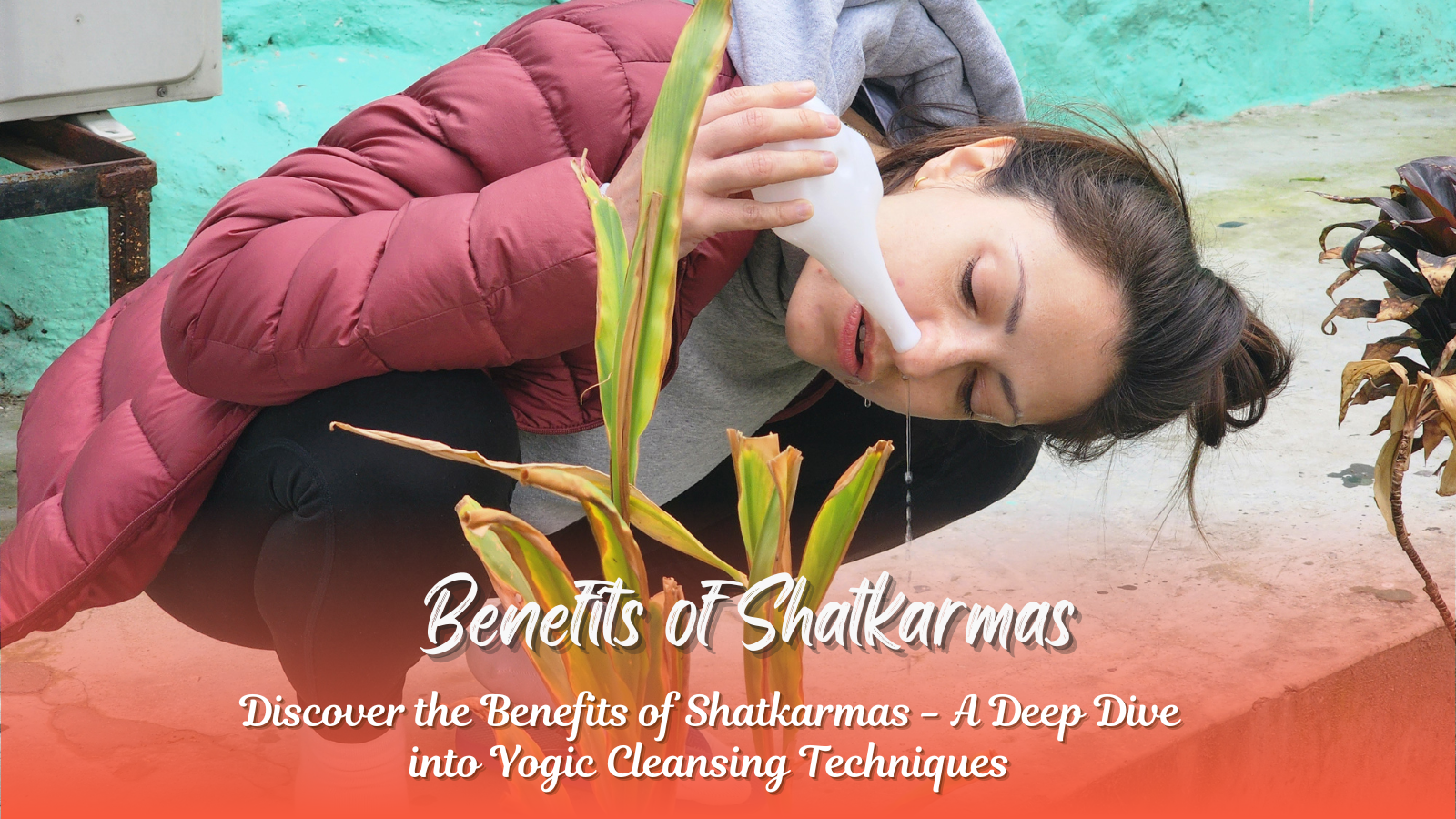
3. Neti Kriya (Nasal Cleansing)
Neti kriya is highly effective in clearing nasal blockages and enhancing respiratory function. It has two main types:
Jal Neti: Uses warm saline water and a Neti pot to flush out nasal passages.
Sutra Neti: Involves passing a soft cotton thread through the nostrils and out through the throat to remove blockages.
Regular practice of Neti kriya enhances breathing efficiency, improves oxygen intake, and even helps in opening the Third Eye chakra.
Nauli kriya is an advanced technique that involves massaging the abdominal organs through rapid side-to-side movements. It has three variations:
Central Nauli: Engages the middle abdominal muscles.
Right & Left Nauli: Isolates the abdominal muscles on each side.
Abdominal Churning: Moves the muscles in a circular motion to stimulate digestion.
This kriya enhances digestion, strengthens the core, and balances the internal organs.
6. Kapalbhati (Cleansing Breath Technique)
Kapalbhati is a unique kriya that also falls under Pranayama. It involves forceful exhalation and passive inhalation to remove stale air and toxins from the lungs.
Benefits of Kapalbhati:
✅ Improves respiratory health and lung capacity. ✅ Enhances mental clarity and focus. ✅ Supports weight loss by boosting metabolism. ✅ Reduces stress and anxiety, making meditation easier.
Regular practice of Kapalbhati is highly recommended for yoga practitioners at all levels.
At Gurukul Yogashala, students receive step-by-step guidance on practicing Shatkarma safely and effectively. The 200 hour yoga teacher training course in Rishikesh covers these techniques in detail, along with asanas, Pranayama, and meditation.
Final Thoughts
Shatkarma kriyas play a crucial role in physical detoxification and mental purification. With regular practice, they enhance overall health, improve focus, and prepare the body for higher yogic practices.
If you’re looking to deepen your yoga journey, consider joining the Best Yoga Teacher Training in Rishikesh at Gurukul Yogashala. These ancient techniques, passed down by sages, can help you achieve inner balance and spiritual growth.
Cleanse your body, clear your mind, and elevate your yoga practice with Shatkarma!
Sattvic food is often associated with purity, nourishment, and spiritual upliftment. But does the Bhagavad Gita mandate the offering of only Sattvic food? In the Gita, food is categorized into three types: Sattvic (pure and balanced), Rajasic (stimulating) and Tamasic (dulling and heavy). Understanding these classifications can help individuals align their diet with their spiritual and physical well-being.
Whether you are practicing yoga or seeking a yogic diet, knowing what is Sattvic food, its benefits and its impact on the mind and body is essential. This article will explore the Bhagavad Gita on food, the significance of Sattvic food, and how it differs from Rajasic and Tamasic foods.
If you are a yoga enthusiast, particularly considering a 200-hour yoga teacher training course in Rishikesh, this guide will deepen your understanding of Sattvic food and its role in the yogic lifestyle.
What is Sattvic Food?
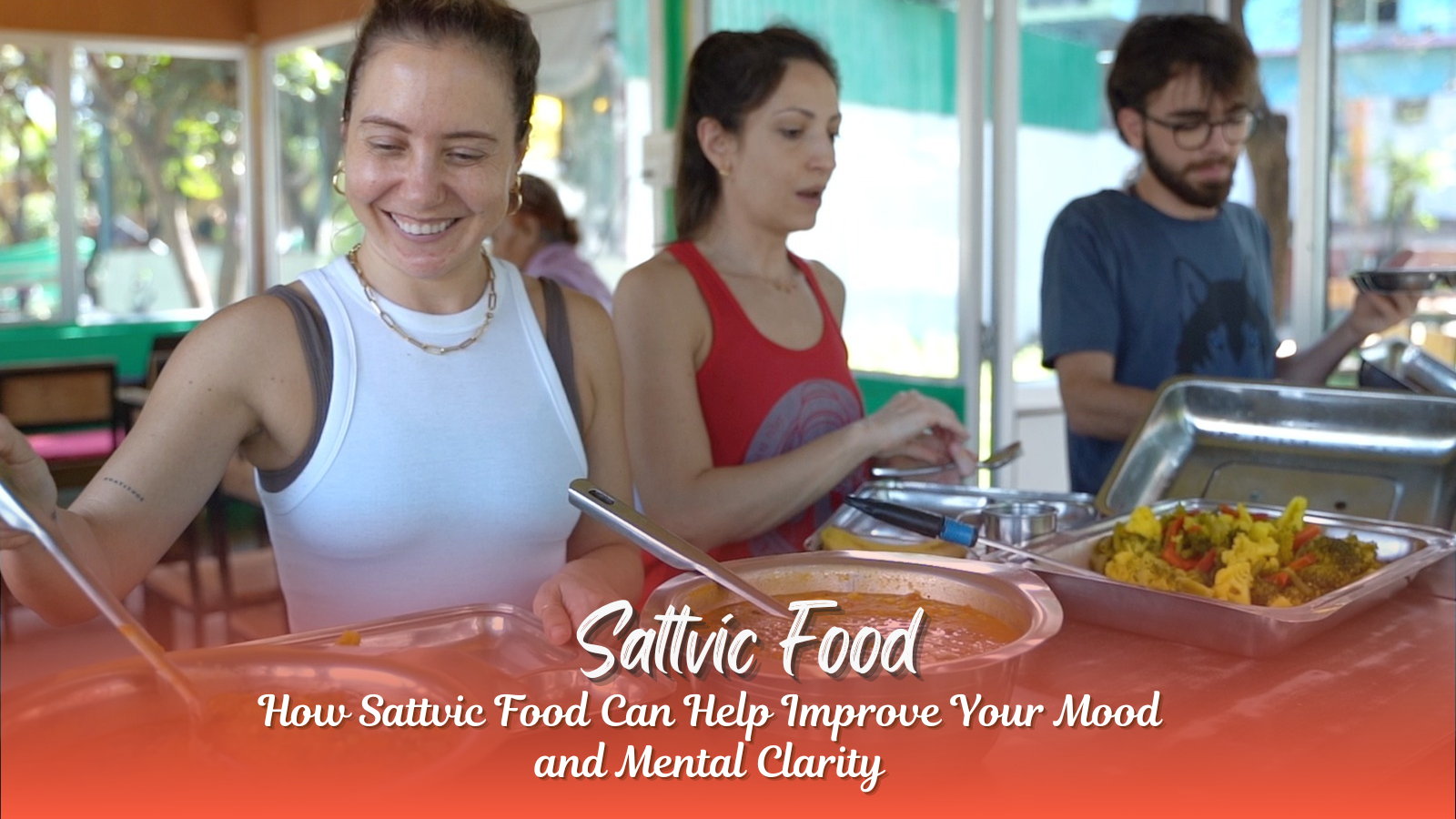
Sattvic food, also referred to as Saatvik food, is known for its purity, lightness, and life-enhancing properties. It is believed to bring mental clarity, physical well-being, and spiritual growth.
Key Features of Sattvic Food:
✔️ Fresh, natural, and organic ingredients ✔️ Free from artificial additives and preservatives ✔️ Vegetarian or plant-based diet ✔️ Easily digestible, promoting gut health ✔️ Supports a balanced mind and body
A Sattvic diet plan is commonly followed by yoga practitioners, Ayurvedic experts, and spiritual seekers, as it fosters inner peace and optimal health.
The Role of Food in the Bhagavad Gita
The Bhagavad Gita on food emphasizes the profound impact that diet has on the body, mind, and soul. In Chapter 17, Verses 7-10, Lord Krishna categorizes food into Sattvic, Rajasic, and Tamasic, highlighting how each type influences our thoughts, emotions, and spiritual progress.
Sattvic Food: The Ideal Choice for Spiritual Seekers
Sattvic food meaning refers to pure, natural, and energy-boosting meals that nourish both the body and soul.
It includes fresh fruits, vegetables, grains, nuts, dairy, and herbal teas.
Benefits of sattvic food: Enhances clarity, peace, and vitality, making it ideal for yoga practitioners and meditators.
Rajasic and Tamasic Foods: The Disruptors of Peace
Rajasic food: Spicy, overly stimulating, and can lead to restlessness. Includes onions, garlic, excessive caffeine, and deep-fried food tamasic in nature.
Tamasic food: Heavy, processed, and stale foods that dull the mind. Includes meat, alcohol, fermented foods, and sugary treats.
Why Is Sattvic Food Recommended in the Bhagavad Gita?
A sattvic diet aligns with the principles of yoga and Ayurveda, promoting mental clarity, emotional stability, and spiritual elevation.
Following a yoga diet rich in Sattvic foods supports inner harmony and higher consciousness, essential for a yogic lifestyle.
In Bhagavad Gita on food, Krishna encourages devotees to consume food that is offered with love and devotion, ensuring its purity and divine energy.
Types of Food According to the Bhagavad Gita: Sattvic, Rajasic, and Tamasic
The Bhagavad Gita classifies food into three categories, based on their effects on the mind and body.
1. Sattvic Food (Pure and Harmonious)
Sattvic food promotes clarity, calmness, and overall well-being.
The Bhagavad Gita on food suggests that consuming Sattvic food enhances spiritual progress, while Rajasic and Tamasic foods can lead to mental agitation or dullness.
The Sattvic Diet: A Path to Healthy Lifestyle
The Sattvic diet is an integral part of Ayurveda and is closely associated with yoga. It aligns with a balanced lifestyle that includes asana, meditation, and mindfulness.
Principles of the Sattvic Diet:
Fresh & Seasonal: Foods should be consumed in their natural state without excessive processing.
Simple & Light: Overly spicy, fermented, or refined foods are avoided.
Mindful Eating: Food should be eaten calmly and with gratitude.
Balanced Nutrients: Incorporates a mix of fresh fruits, vegetables, whole grains, nuts, and herbal teas.
At Gurukul Yogashala, students are encouraged to follow this diet for better focus, improved digestion, and enhanced energy levels during their 300-hour yoga teacher training in Rishikesh.
Does the Gita Say You Can Only Offer Sattvic Food?
The Bhagavad Gita does not explicitly forbid Rajasic or Tamasic foods, but it strongly encourages Sattvic food for those seeking spiritual enlightenment. It teaches that:
✔ Food influences thoughts, emotions, and spiritual growth ✔ Sattvic diet supports discipline, mindfulness, and inner peace ✔ Tamasic and Rajasic foods may cause stress, anxiety, and lethargy
At Gurukul Yogashala, students undergoing a 300-hour yoga teacher training in Rishikesh explore the role of Sattvic food in yoga and how a balanced diet enhances meditation, concentration, and energy levels.
Influence of Food on Mind and Character
The Bhagavad Gita and Ayurveda state that “You are what you eat.” The food we consume shapes our mental state, emotions, and personality traits.
How Food Affects the Mind (Gunas and Diet)
Sattvic Foods → Mental Clarity & Peace
Leads to calmness, compassion, and spiritual awareness.
Practiced in yoga teacher training school in Rishikesh for enhanced concentration.
Rajasic Foods → Hyperactivity & Agitation
Triggers anxiety, aggression, and restlessness.
Consuming spicy, oily, and excessively salty foods disturbs mental balance.
Tamasic Foods → Laziness & Negativity
Leads to lethargy, confusion, and dullness.
Overconsumption of tamasic food hinders yoga practice and spiritual growth.
The Connection Between Food and Karma
In Bhagavad Gita on food, Lord Krishna explains that food prepared with devotion and purity is free from negative karma.
Eating with gratitude and mindfulness purifies thoughts and actions.
Adopting a Sattvic Lifestyle for Better Mental Health
Yogis follow a sattvic diet to achieve spiritual balance and mental clarity.
200-hour yoga teacher training course in Rishikesh includes nutrition sessions on the impact of food on mental well-being.
Benefits of a Sattvic Diet
Adopting a Sattvic diet has numerous advantages for both physical and mental well-being.
1. Enhances Digestion & Energy Levels
Light and fresh foods are easier to digest.
Provides sustained energy for daily activities and yoga practice.
2. Improves Mental Clarity & Focus
Reduces brain fog and enhances cognitive function.
Aids in meditation and mindfulness.
3. Reduces Stress & Anxiety
Nutrient-rich foods support mental stability.
Herbal teas and fresh fruits help maintain a calm nervous system.
4. Supports Spiritual Growth
Aids in connecting with higher consciousness.
Encourages a harmonious and peaceful state of mind.
5. Strengthens Immunity & Overall Health
Fresh, unprocessed foods boost immunity.
High fiber content aids in gut health.
These benefits are particularly emphasized in yoga retreats in Rishikesh, where participants experience a Sattvic diet firsthand.
At Gurukul Yogashala, yoga practitioners experience these benefits firsthand during the 500-hour yoga teacher training in Rishikesh, which integrates yogic diet principles into daily practice.
Sattvic Food Recipes for a Healthy Lifestyle
Looking for simple Sattvic food recipes? Try these:
1. Sattvic Kitchari (Detox Meal)
Ingredients:
1 cup rice
½ cup mung dal
1 tsp turmeric
Cumin seeds, ginger, and rock salt
Method:
Rinse rice and mung dal.
Cook with water and spices until soft.
Serve warm for a light and healing meal.
2. Herbal Detox Tea
Ingredients:
Chamomile flowers
Ginger slices
Honey (optional)
Method:
Boil water and steep herbs for 5 minutes.
Strain and enjoy.
Such Sattvic recipes are commonly included in the meal plans at Gurukul Yogashala, helping students maintain their Sattvic lifestyle throughout their yoga teacher training in Rishikesh.
Food and Health from a Spiritual Perspective
According to Bhagavad Gita on food, diet is not just about nutrition—it is about spiritual purification and energy balance.
Why Eating Right is Essential for Spiritual Growth
The right food choices elevate consciousness and energy levels.
Eating freshly cooked, sattvic meals improves digestion, vitality, and immunity.
Pre yoga breakfast should be light, nutritious, and easily digestible to support asana practice.
Foods That Help with Spiritual Progress
Fresh organic fruits and vegetables
Whole grains like rice, quinoa, and wheat
Dairy (if tolerated) for satiety and nourishment
Nuts and seeds for healthy fats and sustained energy
Herbal teas and natural sweeteners (honey, jaggery) instead of refined sugar
The Science of Eating in Yoga
Practitioners at the best yoga school in Rishikesh follow Sattvic food habits to maintain spiritual focus.
Fasting and mindful eating are recommended to purify the digestive system and mind.
Yoga on empty stomach or after breakfast?
Best practice: Have a pre-yoga breakfast at least 1 hour before practice for optimal digestion.
FAQs on Sattvic Food and Bhagavad Gita
1. What Does Bhagavad Gita Say About Food?
The Bhagavad Gita classifies food into three categories: Sattvic, Rajasic, and Tamasic. It emphasizes that Sattvic food, which is pure, fresh, and nourishing, promotes peace, clarity, and spiritual progress. The Gita suggests that consuming the right kind of food can influence one’s thoughts, emotions, and overall well-being.
2. What is Satvik Food According to Bhagavad Gita?
Satvik food, according to the Bhagavad Gita, includes fresh, natural, and wholesome ingredients. This diet consists of fruits, vegetables, grains, nuts, dairy, and herbal teas, all of which are easy to digest and promote physical and mental harmony. It is free from excessive spices, artificial additives, and processed elements, making it ideal for maintaining a balanced and disciplined lifestyle.
3. How is Food Classified in the Bhagavad Gita?
The Bhagavad Gita categorizes food into three types based on their effects on the body and mind: ✔ Sattvic Food: Pure, fresh, and light, promoting clarity and energy. ✔ Rajasic Food: Spicy, salty, and stimulating, leading to restlessness. ✔ Tamasic Food: Heavy, processed, and dulling, causing lethargy and confusion.
4. What Are Tamasic, Rajasic, and Sattvic Foods?
✔ Sattvic Foods: Fresh fruits, whole grains, legumes, dairy, and nuts that enhance vitality and mental clarity. ✔ Rajasic Foods: Spicy, salty, caffeinated, and fermented foods like pickles, onions, garlic, and coffee, which increase excitement and restlessness. ✔ Tamasic Foods: Processed, stale, deep-fried, and meat-based foods, as well as alcohol, which contribute to sluggishness and negative emotions.
Following a Sattvic diet as per the Bhagavad Gita can help maintain physical health, mental peace, and spiritual progress, making it an integral part of yogic and Ayurvedic lifestyles.
Practical Guidance on Food and Eating Habits
The Bhagavad Gita, Ayurveda, and Yoga provide a holistic guide to mindful eating.
Mindful Eating According to Yoga & Ayurveda
Eat with Gratitude: Offer food to the Divine before consuming.
Chew Slowly & Eat in Silence: Enhances digestion and absorption.
Follow a Sattvic Diet: Fresh, plant-based meals for mental clarity & spiritual progress.
Avoid Overeating & Mindless Snacking: Eat only when hungry, following natural hunger cues.
Final Thoughts
A Sattvic diet is a cornerstone of the yogic lifestyle, as emphasized in the Bhagavad Gita on food. Whether you are a yoga practitioner or simply looking for a healthier lifestyle, understanding Sattvic, Rajasic, and Tamasic foods can guide you toward better mental, physical, and spiritual well-being.
At Gurukul Yogashala, students experience the power of a Sattvic diet during 200-hour, 300-hour, and 500-hour yoga teacher training in Rishikesh. By embracing pure and natural foods, you can enhance your yoga practice, meditation, and overall vitality.
Start your journey to a healthier and more mindful lifestyle today!
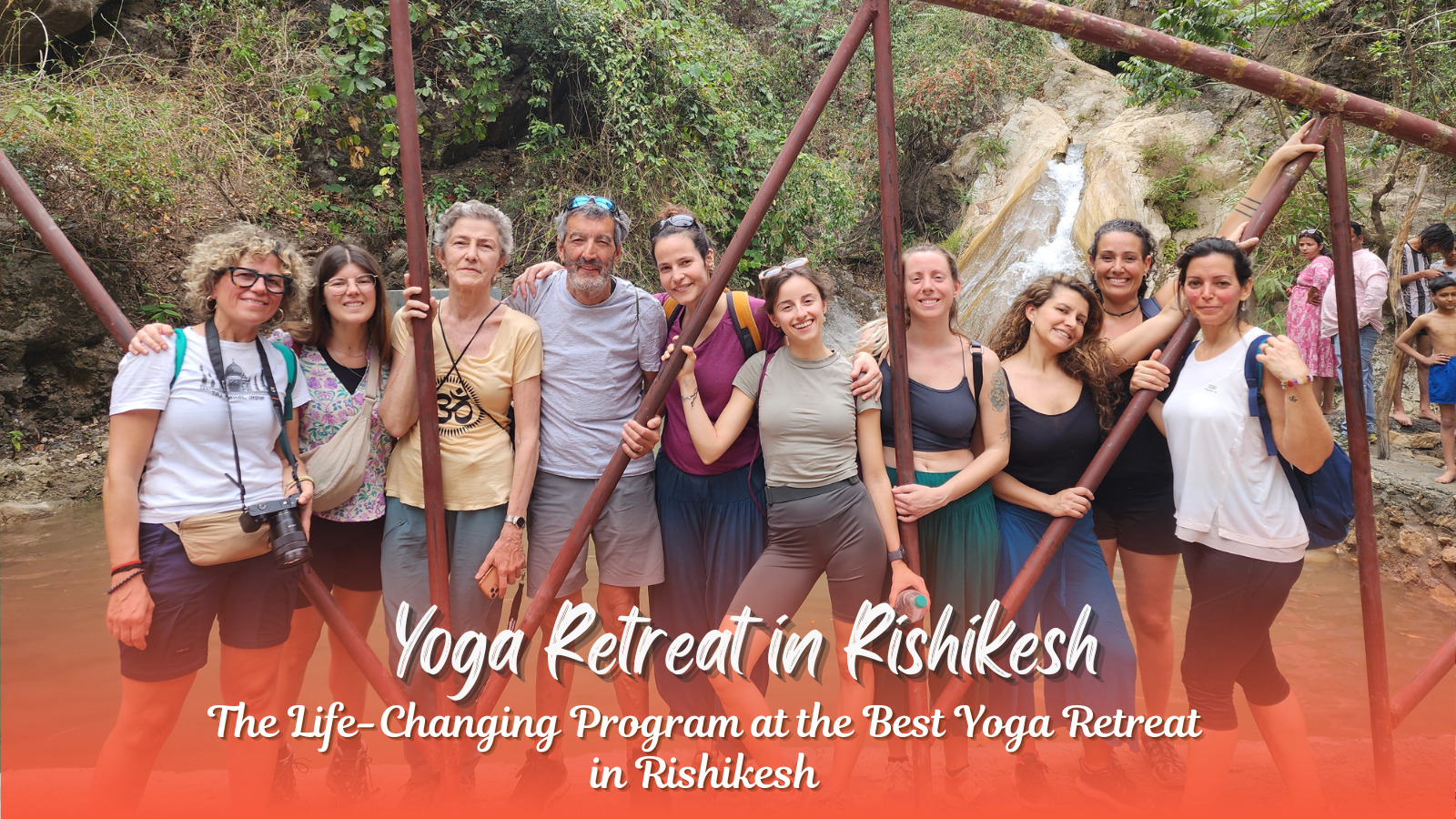
Best yoga retreat in Rishikesh! Discover top-rated retreats for yoga, meditation, and spiritual growth in the Himalayas. In today’s fast-paced world, prioritizing self-care often takes a backseat. The constant pressures of work and family life can lead to stress and a disconnect from our inner selves. A yoga retreat in Rishikesh offers a powerful antidote, providing a dedicated space for rejuvenation and self-discovery. You’ve likely seen advertisements for a yoga retreat in Rishikesh, and this article will explain what these transformative experiences offer. Gurukul Yogashala offers a variety of retreats designed to meet diverse needs.
What a Best Yoga Retreat In Rishikesh Offers
Yoga retreats are short, immersive programs designed to provide a deep experiential understanding of yoga and holistic practices. Unlike in-depth yoga courses, a yoga retreat in Rishikesh focuses on practical techniques you can integrate into your daily life. Retreats can range from a few days to several weeks, offering a transformative experience in a focused timeframe.
Here’s what you can expect from a yoga retreat in Rishikesh:
Immersive Experience: Retreats offer a chance to step away from daily routines and fully immerse yourself in a yogic lifestyle.
Beautiful Natural Settings: Yoga retreats are often held in serene natural environments, such as the foothills of the Himalayas in Rishikesh, which promotes relaxation and inner peace. Connecting with nature—whether it’s mountains, rivers, or beaches—enhances the retreat experience.
Sattvic Lifestyle: Retreats often incorporate a sattvic lifestyle, which emphasizes simplicity, mindfulness, and a pure diet. This typically includes three sattvic meals a day, consisting of fresh fruits, vegetables, lightly cooked whole grains, and minimal spices. Early bedtimes and early morning practices are also common.
Focus on Self-Practice: While retreats may touch on yogic philosophy, the primary focus is on developing a personal practice that you can continue at home.
Cultural and Adventure Activities: Many retreats, particularly those in Rishikesh, offer opportunities to engage in local culture and adventure activities like white-water rafting, trekking, and exploring local temples.
Gurukul Yogashala is among the best yoga retreats in Rishikesh, offering a wide array of programs to suit different needs and interests. A 7 days yoga retreat in Rishikesh is a popular option for those seeking a week-long escape.
The Transformative Impact of a Yoga Retreat
Yoga retreats can offer profound benefits on multiple levels:
Physical Healing: Longer retreats, such as a 21 days yoga retreat in Rishikesh, can be particularly beneficial for those seeking relief from chronic conditions. The combination of yoga, pranayama, meditation, Shatkarma (such as Basti, Neti, and Nasya), and a nourishing diet can help address issues such as back pain, arthritis, insomnia, and digestive problems.
Weight Management: Yoga retreats can also support weight loss goals. Specific asanas (like Dhanurasana, Trikonasana, Navasana, and Veerabhadrasana), combined with specialized massages and kriyas, can contribute to physical transformation.
Mental and Emotional Wellbeing: Meditation is a core component of most retreats, offering a powerful way to cultivate inner peace, reduce stress, and improve sleep. Guided meditation, mantra meditation, chakra meditation, and mindful meditation are just a few of the techniques that may be explored. These practices can be particularly helpful for those dealing with anxiety, depression, and PTSD.
Suitable for All Levels: Whether you’re a complete beginner or an experienced practitioner, there’s a yoga retreat for you. Many yoga center retreat options cater to different levels of experience. Even if you’ve never tried yoga before, you can find a program that’s right for you.
Year-Round Availability: Yoga retreats in Rishikesh are offered throughout the year, making it easy to find a time that fits your schedule. There are even specialized retreats, such as kid yoga retreats, catering to specific demographics.
If you are looking for yoga and meditation retreats near me and want to experience authentic yoga, Rishikesh is a great place to start. Even an austin free yoga retreat cannot provide the same immersive experience and deep transformation that a dedicated retreat in a spiritual location like Rishikesh can offer.
Affordability and Continued Practice
Many yoga retreats in Rishikesh offer affordable options, making these transformative experiences accessible to a wider audience. Once you’ve learned the fundamentals during a retreat, you can continue your practice at home, reaping the ongoing benefits of increased presence, improved wellbeing, and a stronger connection to yourself.
Final Thoughts
A yoga retreat offers a powerful opportunity to step back from the stresses of daily life and reconnect with your inner self. Whether you’re seeking physical healing, mental clarity, or simply a deeper understanding of yoga, a retreat in Rishikesh can be a transformative experience. Gurukul Yogashala offers a variety of well-structured retreat programs for all ages and interests, allowing you to embark on a journey of self-discovery and personal growth.
Mindfulness is a widely discussed topic in holistic wellness, yoga and meditation. It is integrated into various practices, including consciousness meditation, to enhance self-awareness and mental well-being. But what is mindfulness exactly?
If you’re curious about consciousness and how it can transform your life, this guide will help you understand its essence, benefits and practical applications. Many yoga teacher training courses in Rishikesh emphasize mindfulness as an essential part of their curriculum.
Let’s dive deeper into consciousness and explore its connection to yoga, meditation and mental well-being.
What Is Mindfulness?
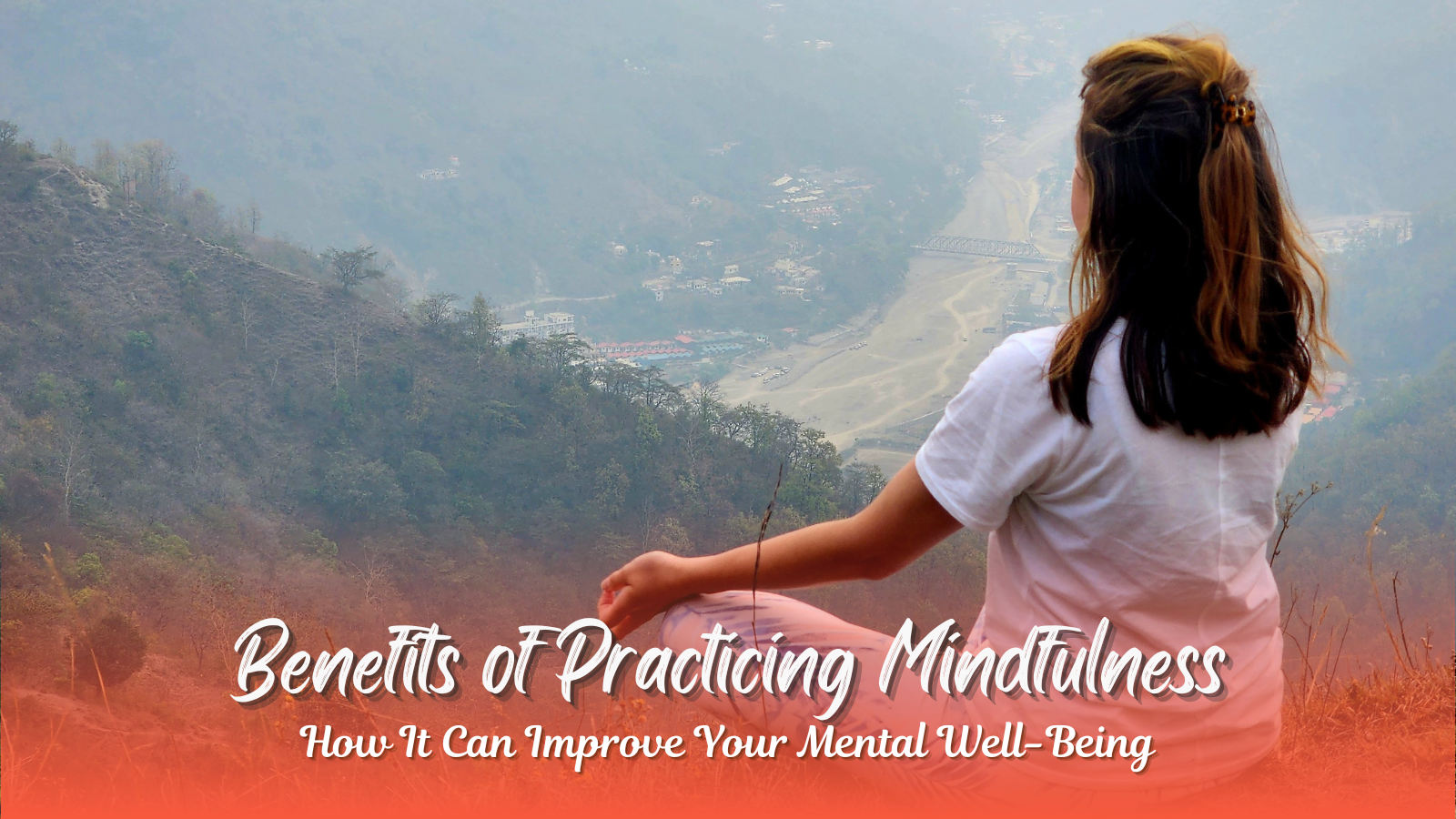
Mindfulness Definition: Mindfulness is the practice of being fully present in the moment, aware of your thoughts, feelings and surroundings without judgment.
It involves focusing attention on the present rather than dwelling on the past or worrying about the future.
Consciousness can be incorporated into daily activities like eating, walking, and even working.
It helps develop a deeper connection with oneself and enhances overall well-being.
Certain yoga postures prepare the body for consciousness meditation:
Sukhasana (Easy Pose) – Encourages relaxation and inner peace.
Padmasana (Lotus Pose) – Ideal for deep meditation and mindfulness.
Vajrasana (Thunderbolt Pose) – Aids digestion and mindfulness practice.
Practicing these asanas enhances consciousness and meditation experiences.
Conclusion
Mindfulness is a transformative practice that enhances self-awareness, emotional balance, and mental clarity. By incorporating consciousness into daily life, individuals can experience profound personal growth.
For those interested in deepening their mindfulness practice, enrolling in a yoga teacher training school in Rishikesh can be an excellent step. Programs like the 200 Hour, 300 Hour, and 500 Hour Yoga Teacher Training in Rishikesh provide in-depth knowledge of consciousness, meditation, and yoga.
By embracing consciousness, you can cultivate inner peace, reduce stress and lead a more fulfilling life. Whether through meditation, breathwork or yoga, the journey to consciousness starts with a single breath.
Yoga as defined in ancient scriptures, is the union of body, mind and soul. However, in today’s world, it is often mistaken for just physical postures or asanas. But yoga is much more than that—it is a holistic practice that leads to spiritual enlightenment.
If you want to deepen your yoga practice and understand its true essence, enrolling in a 200 Hour Yoga Teacher Training in Rishikesh at Gurukul Yogashala is the perfect choice. Here, you will learn traditional and authentic teachings of yoga based on the ancient scriptures, the Vedas.
Let’s explore the Eight Limbs of Ashtanga Yoga, as described by Sage Patanjali, which will help you connect with your inner self and achieve spiritual growth.
Eight Limbs of Ashtanga Yoga – The Path to Enlightenment
At Gurukul Yogashala’s 200 Hour Yoga Teacher Training in Rishikesh, India, you will gain in-depth knowledge of the Eight Limbs of Yoga, which serve as a roadmap for your spiritual journey.
1. Yamas – Ethical Guidelines for a Harmonious Life
Yamas are ethical principles that help create a peaceful and stress-free society. These include:
Ahimsa (Non-violence) – Practice kindness and compassion.
Satya (Truthfulness) – Always be honest in words and actions.
Asteya (Non-stealing) – Do not take what is not yours.
Brahmacharya (Control of Desires) – Use your energy wisely.
Aparigraha (Non-greediness) – Avoid material obsession.
2. Niyamas – Personal Discipline for Inner Peace
Niyamas are personal practices that guide you toward self-improvement:
Shaucha (Cleanliness) – Maintain physical and mental purity.
Santosha (Contentment) – Be satisfied with what you have.
Tapas (Self-discipline) – Cultivate dedication and persistence.
Swadhyaya (Self-study) – Reflect on yourself and sacred texts.
Ishwar Pranidhana (Surrender to the Divine) – Trust the higher power.
3. Asana – The Foundation of Physical and Mental Balance
The term Asana refers to a posture that is steady and comfortable.
Why Choose Gurukul Yogashala for 200 Hour Yoga Teacher Training in Rishikesh?
At Gurukul Yogashala, we focus on preserving the ancient teachings of yoga while offering a transformative experience. Here’s why our program stands out:
Authentic Teachings – Learn yoga based on Vedic scriptures and traditional yogic texts. Experienced Instructors – Our expert teachers guide you in asanas, Pranayama, meditation, and philosophy. Spiritual Growth – Understand yoga beyond asanas and explore mind-body-soul connection. Serene Location – Train in the spiritual atmosphere of Rishikesh, the Yoga Capital of the World. Comprehensive Curriculum – Our 200 Hr Yoga TTC in Rishikesh includes philosophy, anatomy, Ayurveda and teaching methodology.
Conclusion – Your Path to Self-Discovery Starts Here
Yoga is more than just a practice—it’s a journey to self-realization. The 200 Hour Yoga Teacher Training in Rishikesh at Gurukul Yogashala helps you deepen your practice, achieve inner peace, and embark on a transformational experience.
If you’re ready to explore the authentic teachings of yoga, enroll in our 200 Hour Yoga Teacher Training in Rishikesh, India and begin your path to spiritual enlightenment today!
A transformative journey yoga in Rishikesh, where the Ganges whispers ancient wisdom in the lap of mighty Himalayas, is dream come true. Yoga retreat in Rishikesh invites you to discover the profound power of yoga, making way for not just physical flexibility but a holistic well-being.